Custom facility management systems, brand, and web presence for a growing storage business
A trusted local storage business that was impossible to find online, tracked tenants by hand, and burned more staff hours than the work deserved. I built them a custom facility management system and a new web presence to modernize both sides of the operation: easier for the business to run, easier for customers to rent and manage their units.
The business was spending too much time on manual processes: tracking tenants, chasing payments, managing unit availability. I built a custom facility management system that handles all of it in one place. The owner can see unit status, tenant history, and payment records at a glance. Customers can rent and manage their units without phone calls or paperwork. No per-seat licensing, no enterprise bloat, just a system built around how a small storage business actually runs.
A renter's story usually lives in pieces: an agreement in a drawer, a phone number on a sticky note, a payment dispute somewhere in an inbox. People change addresses, swap phone numbers, add a second unit, and the pieces drift apart.
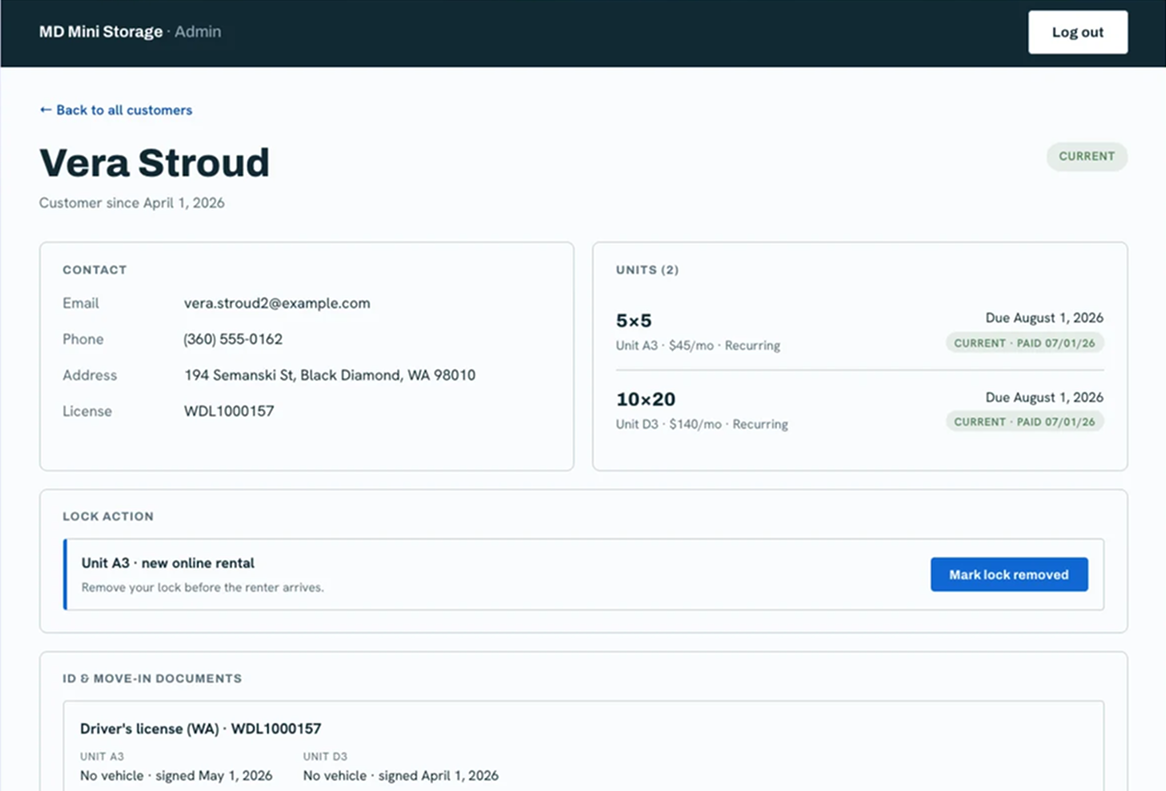
Each customer gets a single page that holds everything: contact details, license, their units with rates and payment status, pending lock actions, and the signed move-in documents. Update a phone number or an address and the history stays attached to the person, so the answer to any question about a customer is always one click, not an archaeology dig.
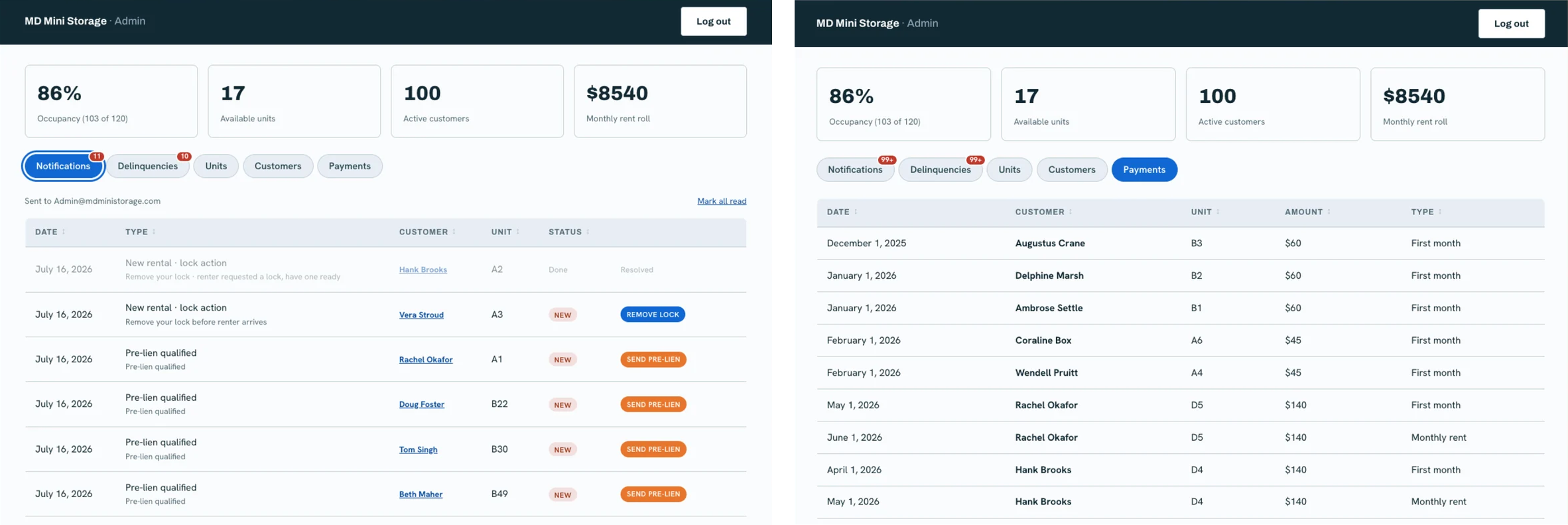
Keeping track of what payments were due and when was eating up hours every week. I automated the entire cycle: the system tracks payment status across every unit and automatically generates letters and notices to customers so everyone stays on the same page about the state of their units. No more manual spreadsheets, no more chasing people down.
I optimized the site for traditional search with structured data, schema markup, and local SEO best practices. Beyond Google, I also optimized for AI-powered discovery, making sure AI assistants surface and recommend MD Mini Storage when people ask conversational questions about storage options in the area.
The hardest part of this project wasn't the software. This is a very small business that had been running the same way for a long time, and a new system, however good, competes with years of habit. Adoption was the real risk, not capability.
I took the time to learn the tools they already knew and mapped my patterns to them, familiar layouts, familiar words for things, workflows in the order they already worked. The smaller the leap from what they knew, the faster the system started earning its keep. Adoption is where the time and money savings actually live, and a tool nobody fights is a tool that gets used.
Building tools for small businesses? Let's talk.