AI-powered stats, insights, and lineup tools for 750,000 youth, club, and high school teams
Coaches log every pitch and play in GameChanger, and then most of that data just sits there. We led design on a new AI-powered stats and insights initiative, in development for 750,000 youth, club, and high school teams, shipping custom LLM features that turn a season of raw game data into things a coach can actually use before the next game or practice.
Game books weren't translating into anything actionable for a volunteer coaching staff. The data was all there to help coaches help their players, but its format and accessibility made it nearly impossible for a volunteer, usually one coach with more players than they can watch at once, to turn a season of records into action.
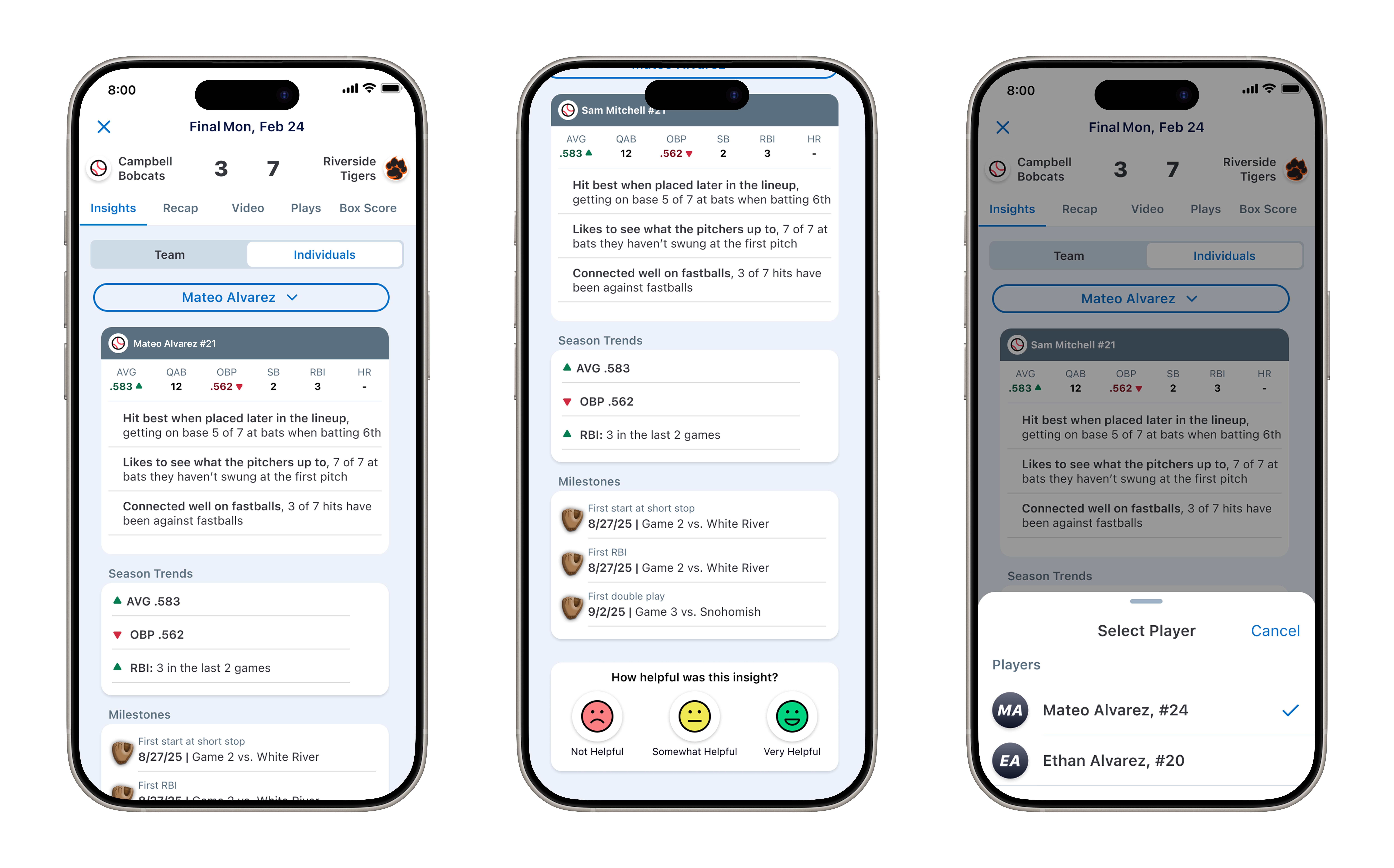
We made a plan to have the book talk back. Every game needed to end with an AI-generated summary of what happened and why: key moments, win probability shifts, and patterns carried into practice, grounded in what actually happened in the latest game and throughout the season.
The output should be plain-language bullets, easy to consume, giving coaches a quick heads-up while letting them dig deeper into the trends behind each insight, from the latest game and across each season.
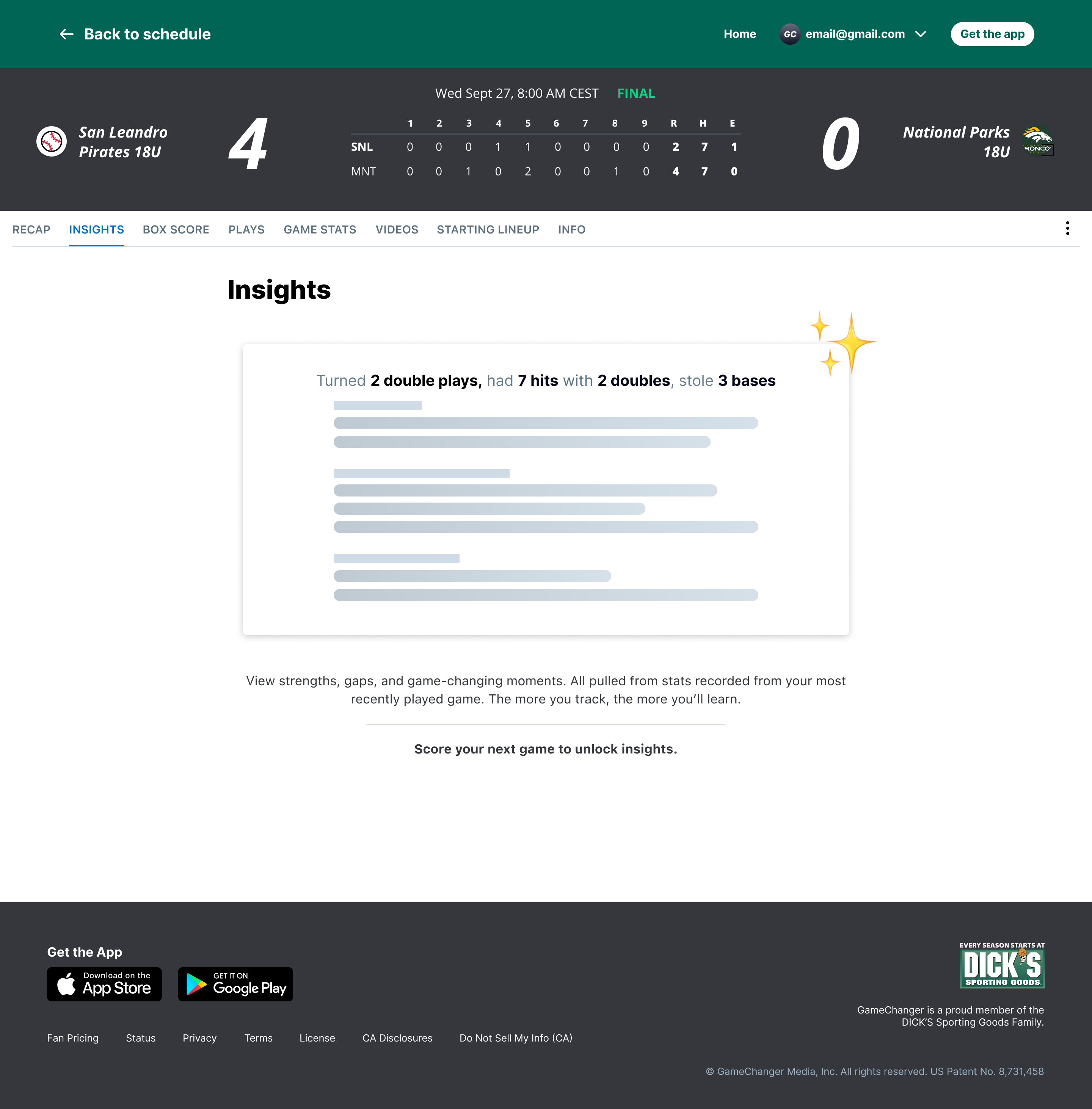
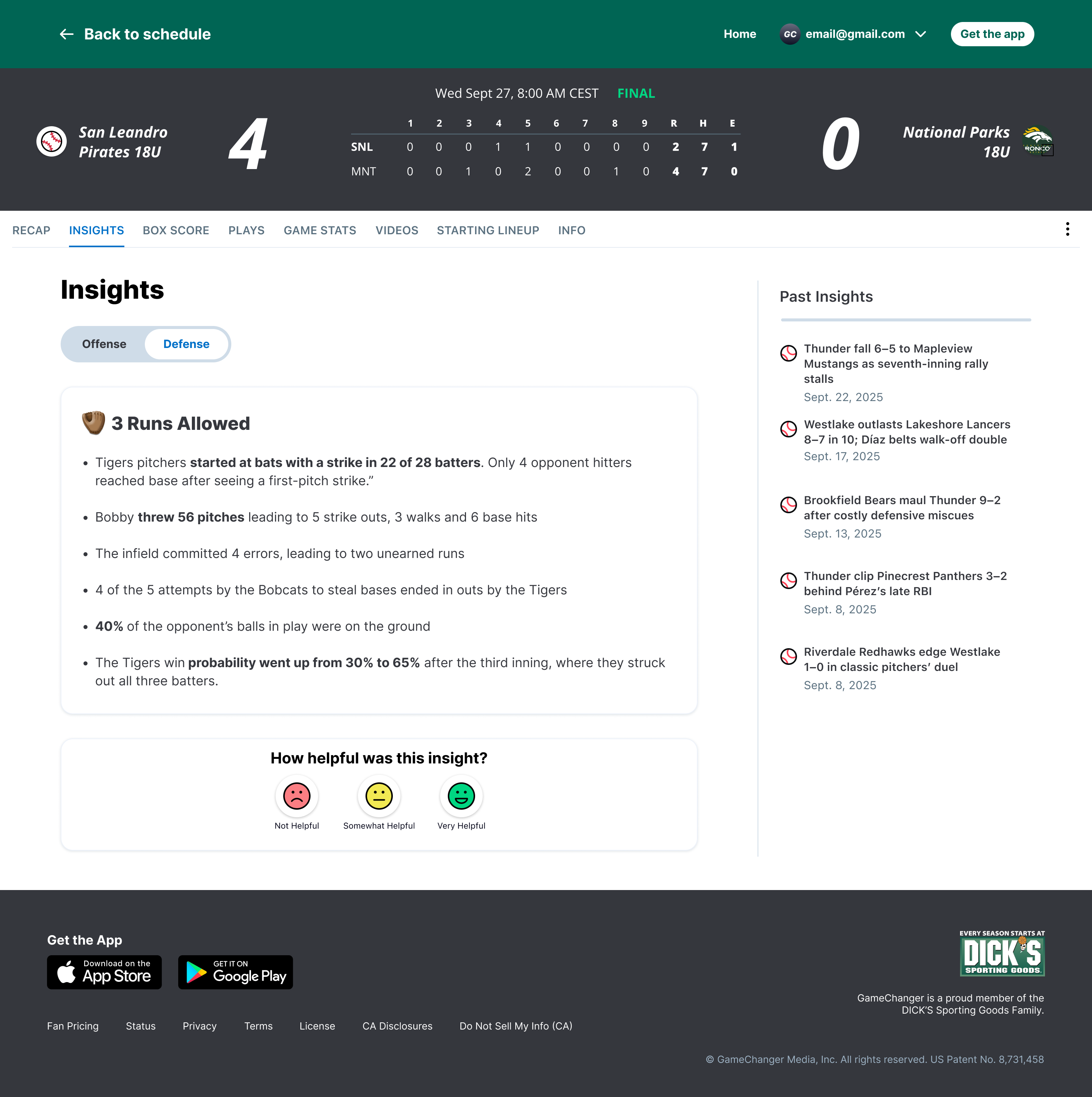
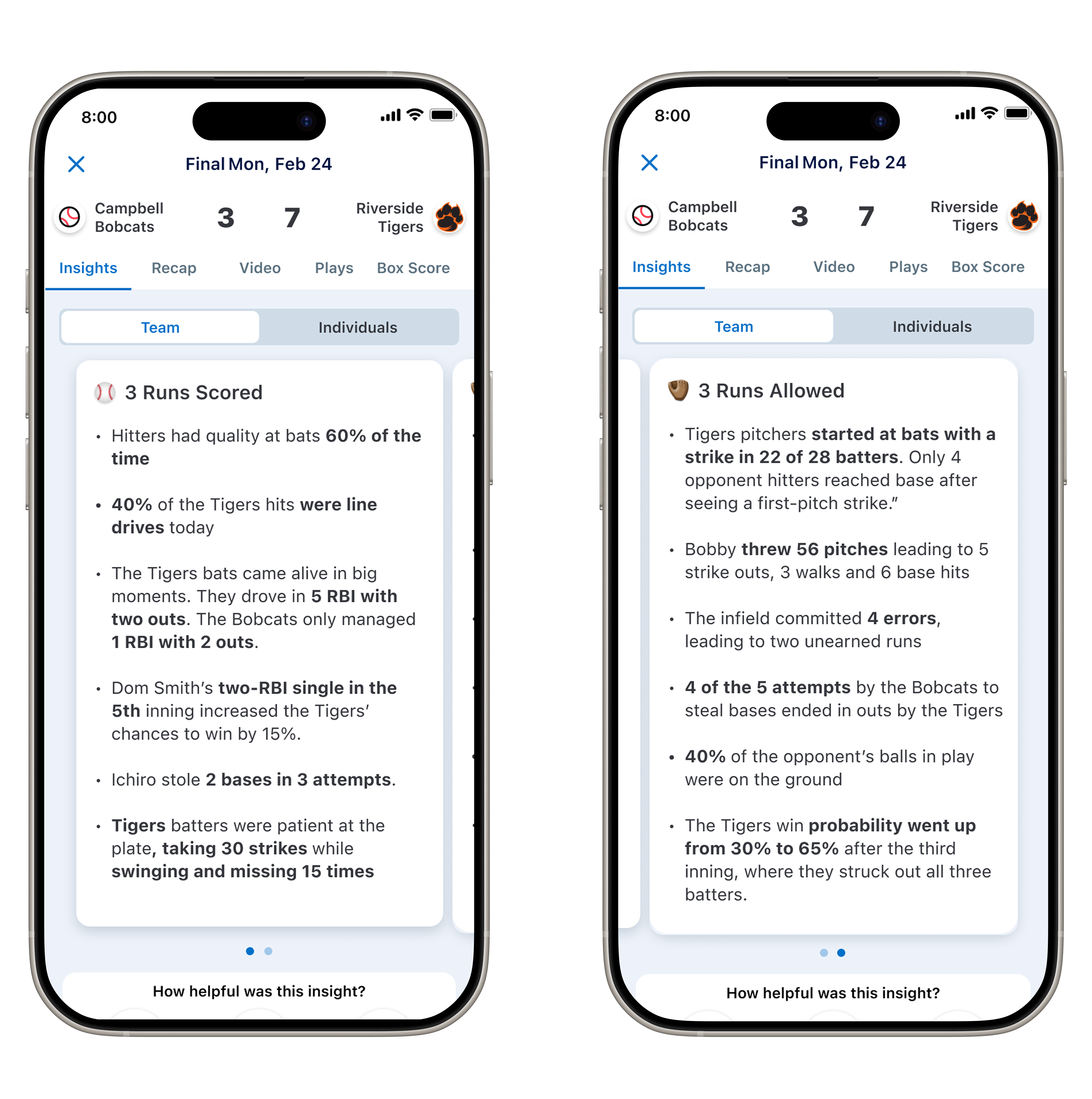
Most of the people who care about a youth game weren't in the stands. Grandparents, working parents, the extended family: after the final out they want to know what happened, and a box score doesn't tell a story. Coaches simply don't have the time to put the narrative together.
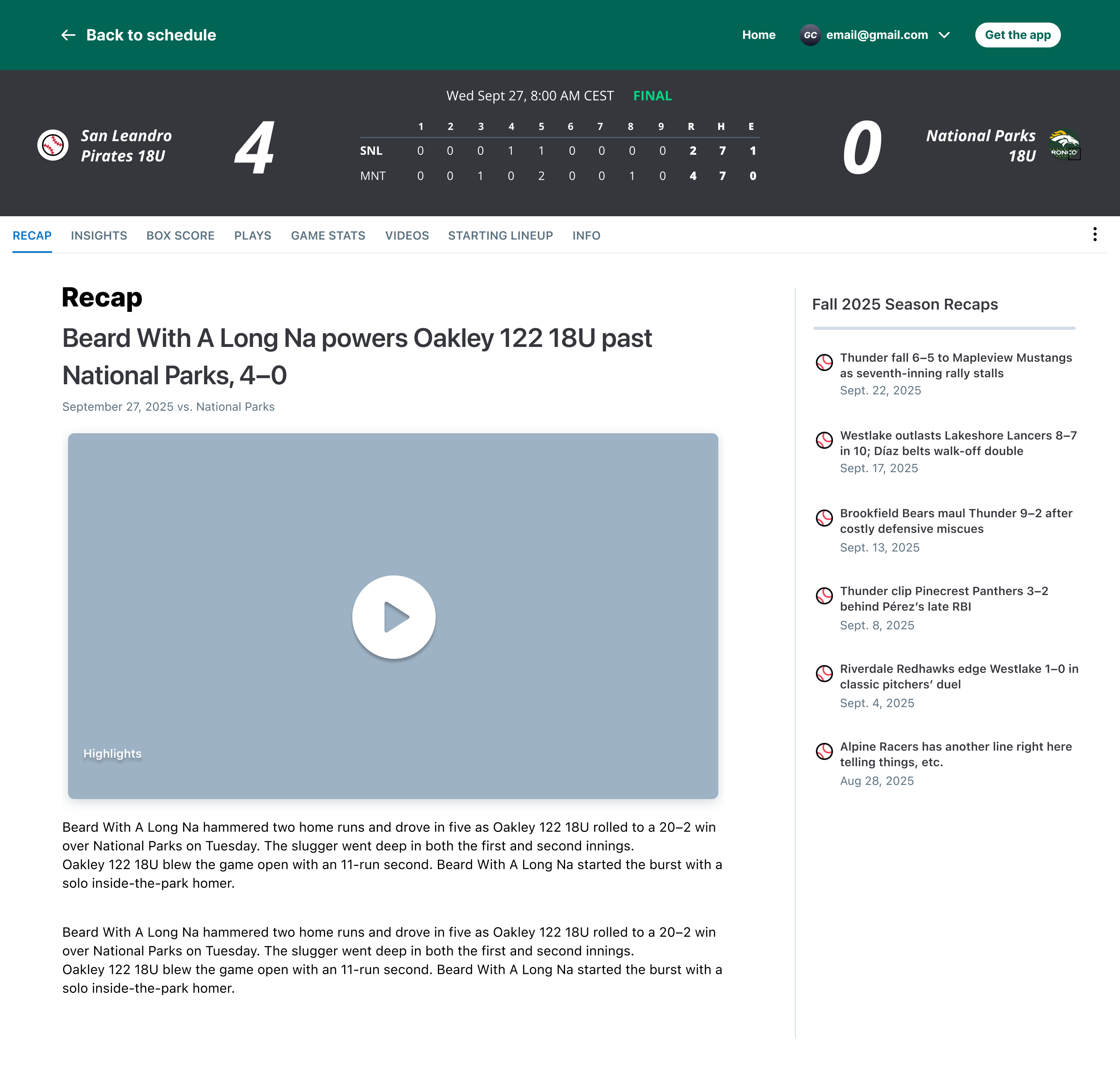
The recap writes itself. After every game, an article-style breakdown goes out for the general public: a headline, the turning points, who did what, all generated from the game's data and paired with highlight clips pulled from the streamed game. Past recaps stay on the team page, so a season reads like a season, not a pile of scores.
There are always more players than coaches, and wildly diverse skill sets among them, which makes it hard for a volunteer coach to keep track of who needs to work on what at scale. Meanwhile, parents have their own questions: how is my kid doing, and why isn't my kid playing more?
We took an approach where players and parents see the celebration layer first: stat cards, season trends, and milestones marking a first of the season or a first of a career, like a first start at shortstop or a first RBI. Coaches and permissioned staff see past that into evaluation: AI-written scouting notes on lineup performance and pitch selection tendencies, the picture that tells them what to target at the next practice.
Two views: a development plan for the coach and their staff, and milestones and moments worth celebrating for the player and their family, adjustable as the athlete gets older and can make constructive use of those insights.
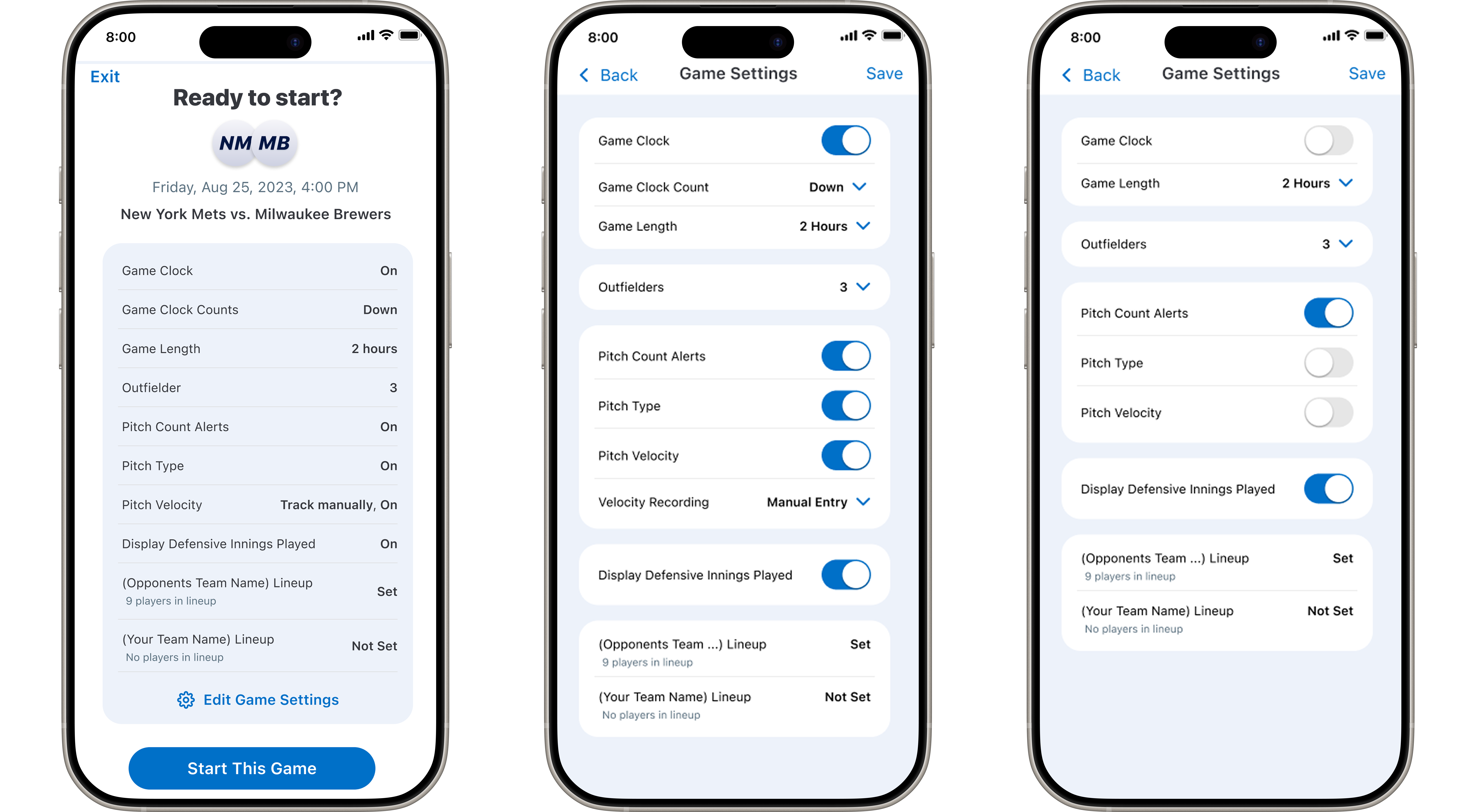
Stat books are kept by volunteers, and depending on the team, that might be the same person every game or someone new each time. What gets tracked needed a way to adapt to the experience of each scorekeeper.
Before designing anything, we wanted to know who actually runs the books and how they went about it. How did they prepare for a game? Did they arrive a little early, or more often than not, were they handpicked from the stands moments before first pitch? What were they most worried about, and why? What was easy to track, and what was creating friction?
We structured a study to shadow scorekeepers through real games and conduct interviews, leading to reports that shaped the product moving forward. We found that most games are started by parent volunteers, and there's a real difference between the regular who scores every week, and has maybe been doing it for several seasons, and the last-minute shoulder-tapped parent holding an app they've never opened, with an account they created that day.
The new pre-game setup starts with defaults from the coaching staff, then flexes to whoever is responsible for starting that particular game. How the clock runs, which pitches to track and how granularly, who's at bat and on deck for either team, how each at-bat played out: each can be dialed down on its own, boiled down to the bare essentials that keep a volunteer on track while still capturing what the coach depends on for practice and game plans. The "Ready to start?" screen confirms it all, one tap to change anything before first pitch.
Keeping it simple loses nothing. If the coach has the time and means, they can go back through the game stats alongside video and fill in anything that was missed, making sure it's part of that game's history.
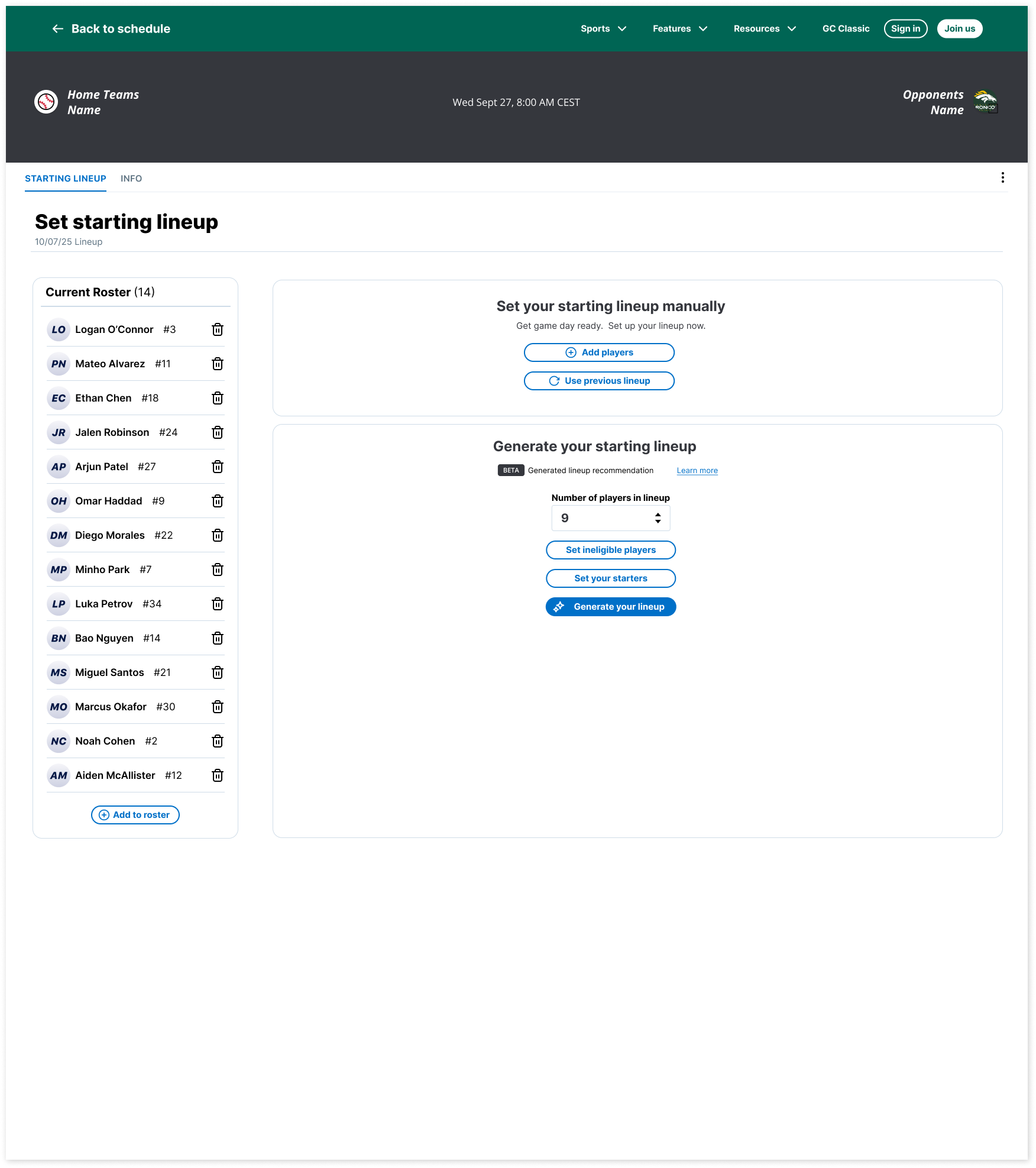
Building a lineup for a youth team is guesswork stacked on memory: who's available today, who's eligible, who hasn't started in a while, which position suits which kid, and coaches rebuild it from scratch every game.
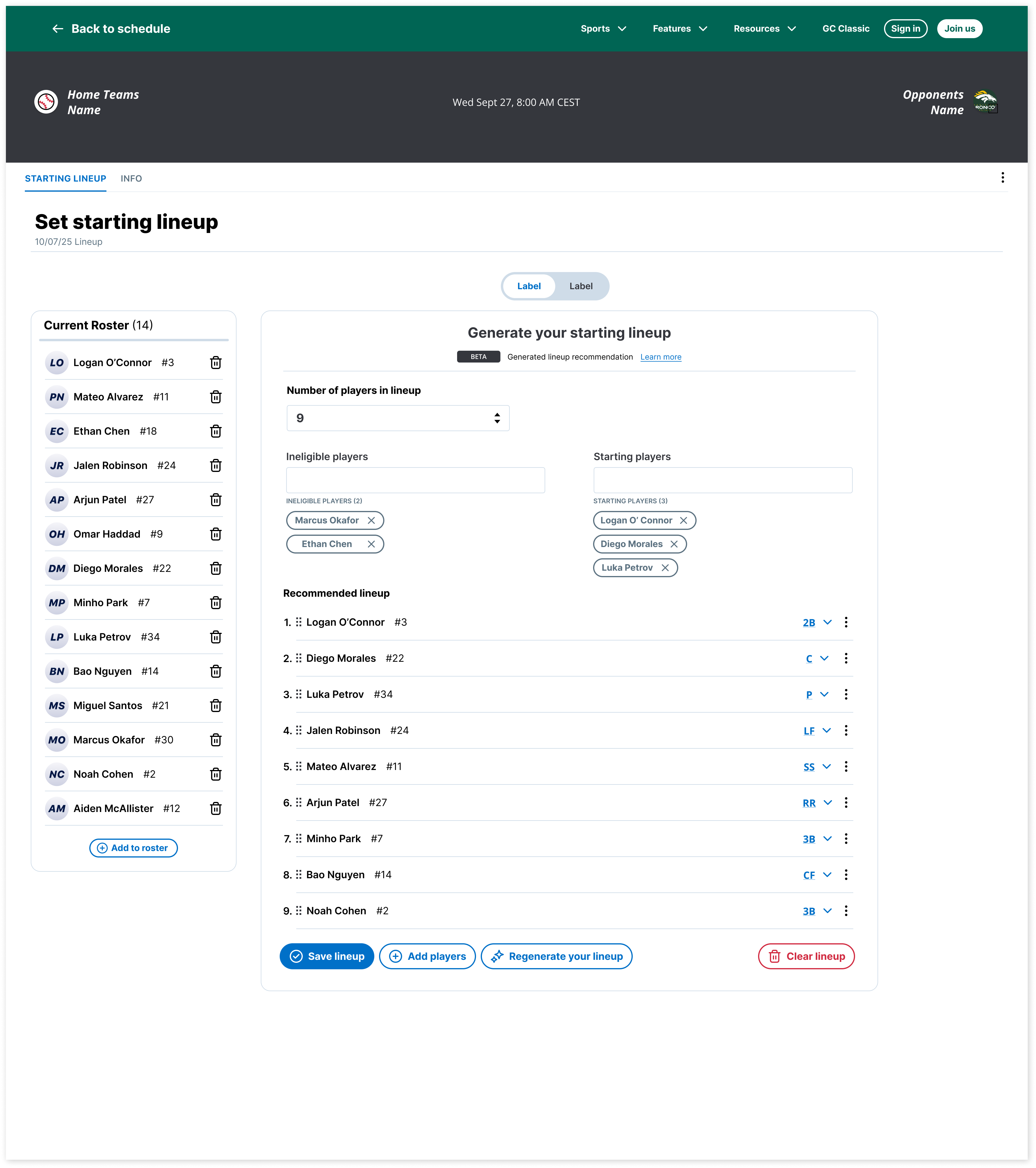
The lineup can now be generated from the season's data. The coach sets how many players are in the lineup, marks who's ineligible and who's locked in as a starter, and the assistant suggests a batting order and the position each player should start in. From there it's the coach's call: drag to reorder, tap to change a position, regenerate, save.
The model does the remembering. The coach keeps the decision.
Coaches are constantly asked about playtime, and on developmental teams, kids want to play everywhere. Across a season, it's hard for any coach to remember who has played where, and when.
We made rotation something you plan instead of something you remember. Coaches can map position rotations before the game, switch players in and out easily during it, and get reminders as the game runs, so the plan doesn't have to live in anyone's head.
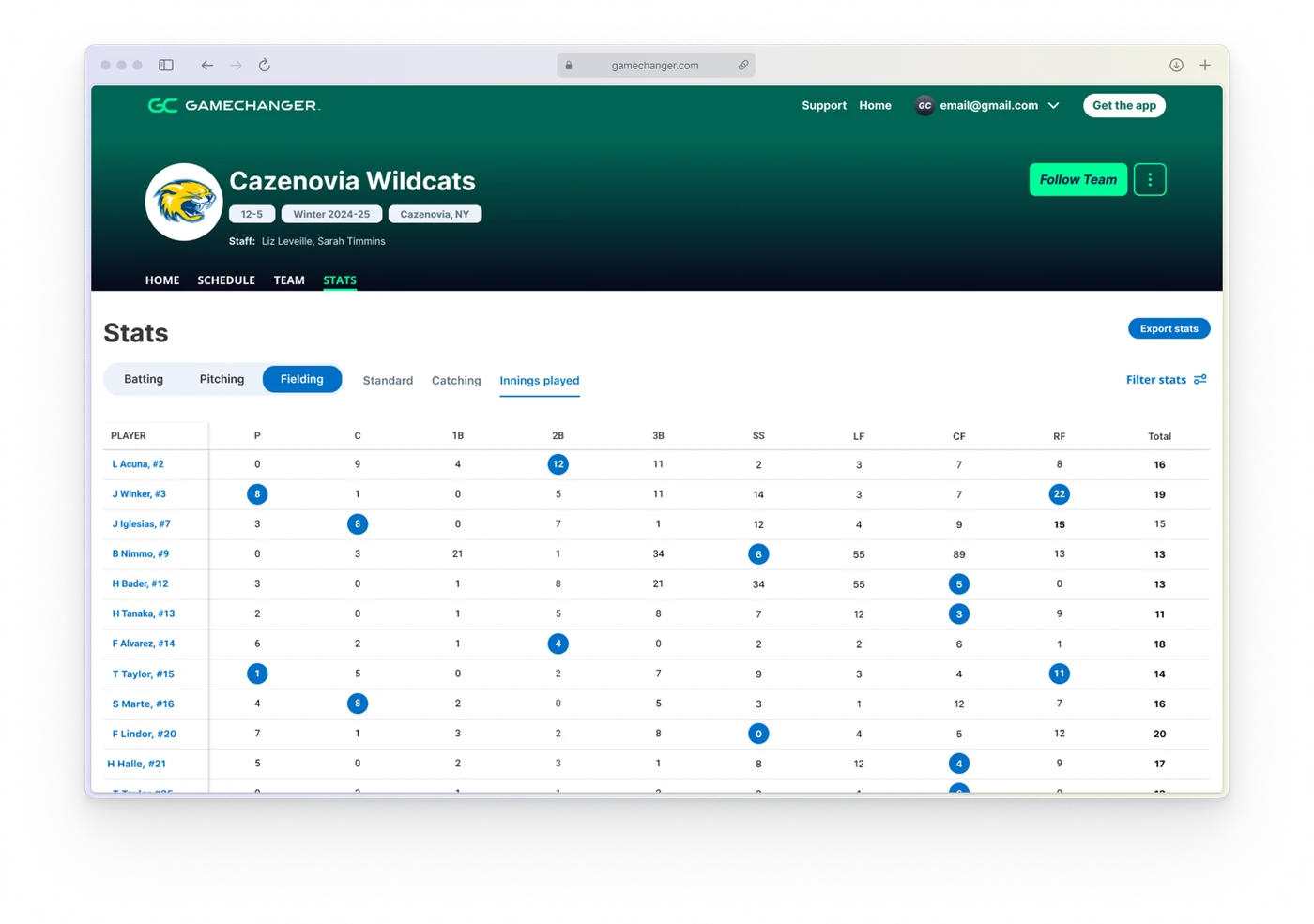
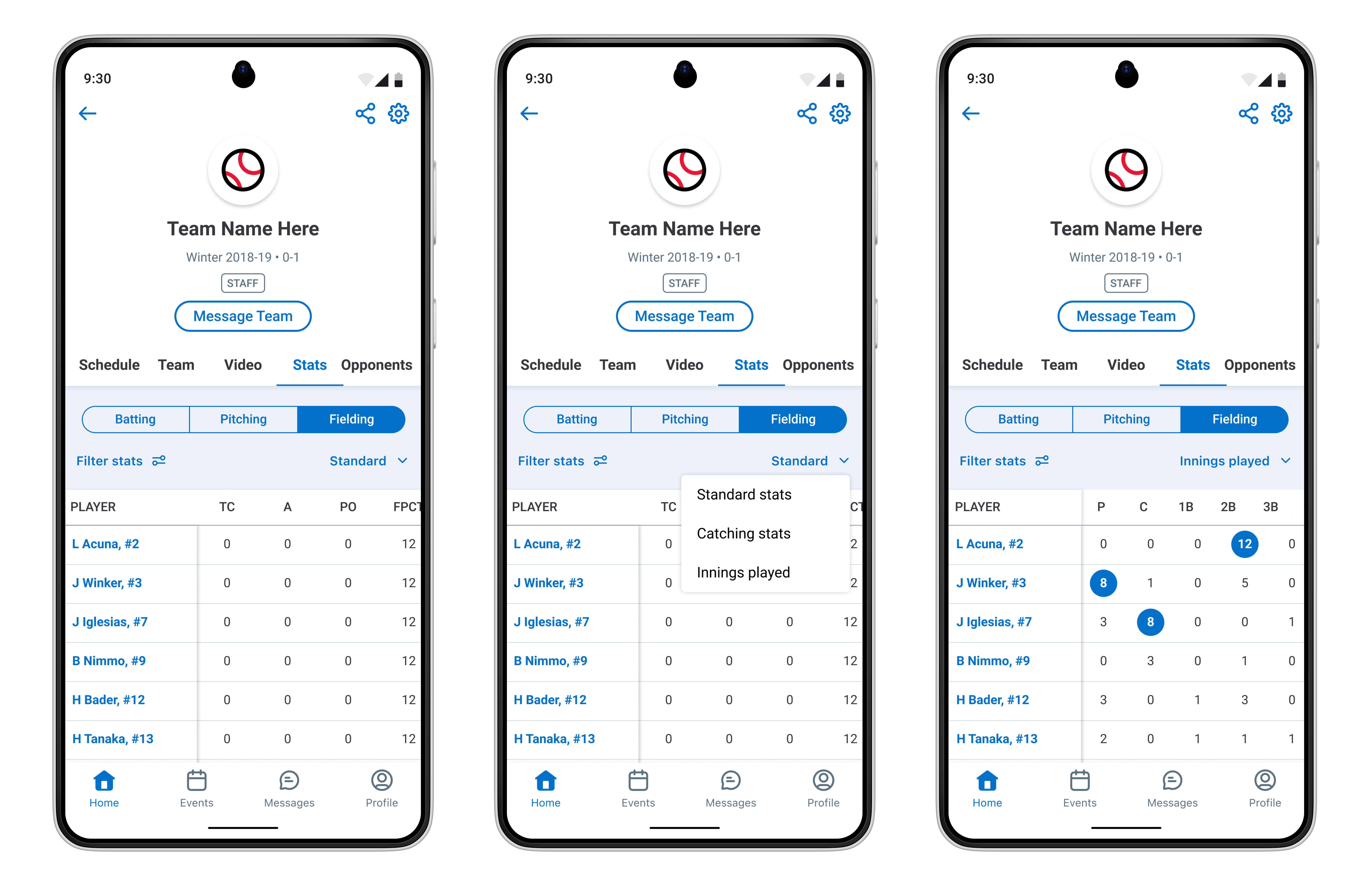
Afterward, a post-game report shows who played where, and a seasonal view rolls it all up: a positional grid of playtime across the year that helps decide who plays where and when, and, as the season goes on, connects the dots between how the team performed and who was playing which position.
All of it flows into each player's own stats, where they or their parents can see how much they've played each position and how they're shaping up there. Errors land against the position where they happened, and milestones worth celebrating sit right alongside them, all locked down by permissions to keep things age-appropriate.
Working on data-driven products for your users? Let's talk.